
Lafayette Parole and Probation Compared
Parole usually follows a term of imprisonment. The person has left physical prison custody, yet serves the balance of the sentence under conditions set by Louisiana law and the parole authority. Probation comes from a court sentence. It may follow a short jail stay, a suspended sentence, or no prison term at all. In either case, a current assignment is evidence of community supervision. It is not the same as final discharge, which means the supervision or custody term has ended.
That distinction matters in Lafayette Parish. Someone may disappear from the Lafayette Parish Correctional Center roster because of a state transfer, not release. A correct LAVNS result showing a Probation and Parole assignment points toward release from physical incarceration, while a prison location points toward continued confinement. The underlying court or parole record explains why the person is supervised.
| Question | Parole | Probation |
|---|---|---|
| Where it begins | After release from imprisonment | Through a court sentence |
| Who supplies the legal basis | Committee on Parole and governing sentence law | Sentencing court and its minutes |
| What confirms current status | LAVNS, DPS&C locator, and assigned district | Court record, LAVNS when covered, and assigned district |
| What the status does not prove | That the sentence is fully discharged | That the person served a state-prison term |
Verify Lafayette Post-Release Supervision
Louisiana routes the public web lookup through the Louisiana Automated Victim Notification System, or LAVNS. DPS&C says the system includes imprisoned people and people under probation or parole supervision. It is updated every 24 hours. A time-sensitive result should therefore be checked with the source office rather than treated as an instant certified record.
Match more than a name. Lafayette Parish has a large corrections workload, and two people can share the same spelling. Use a DPS&C number, booking or case number, lawful date of birth, reporting agency, and location when available. If identifiers do not line up, stop short of assigning the supervision record to either person.
LPSO advises using a booking number directly in VINE if its portal handoff does not find the correct person. A released or out-of-custody event means the reporting agency ended that custody. It does not resolve a transfer, another hold, or the end of the sentence. Read the supplying agency and location before drawing a conclusion.
- Search LAVNS by the best name or ID/case number, then open only a record whose identifiers and agency fit.
- Read the location and custody status. A prison facility means confinement; a current P&P assignment supports community supervision.
- Call the DPS&C automated locator at 225-383-4580 with the DPS&C number, or name plus date of birth, and ask for the assigned district.
- Contact that assigned district for the public status that can be confirmed. Do not assume Lafayette District based only on a home address.
- Reconcile parole with the board result, or probation with the sentencing minutes, before describing the legal basis.
For the broader custody and release-record chain, the Lafayette Parish released-inmate search explains how to pair the parish record with court and receiving-agency evidence.
Note: A no-result may reflect spelling, update delay, transfer, or coverage limits and is not proof that supervision ended.
Lafayette Parish Supervision Office
The DPS&C Lafayette District covers Acadia, Lafayette, and Vermilion parishes. Its official page identifies Grant Domingues as district manager and reports about 4,200 cases plus roughly 2,100 investigations each year. Those figures describe office workload. They are not release totals or a count of unique people now under supervision.
The district may confirm whether a public assignment remains current and explain its correction route. It may not disclose a person's home address, schedule, specific conditions, or protected case details. Call after the locator identifies this office, not merely because the arrest or residence was in Lafayette Parish.
DPS&C Lafayette District
237 W. Willow St.
Lafayette, LA 70501
337-262-5444
Monday through Friday
8:00 a.m. to 4:30 p.m.
The official district page provides the local contact details and coverage area.
View the Lafayette District source page before calling, since office information may change.
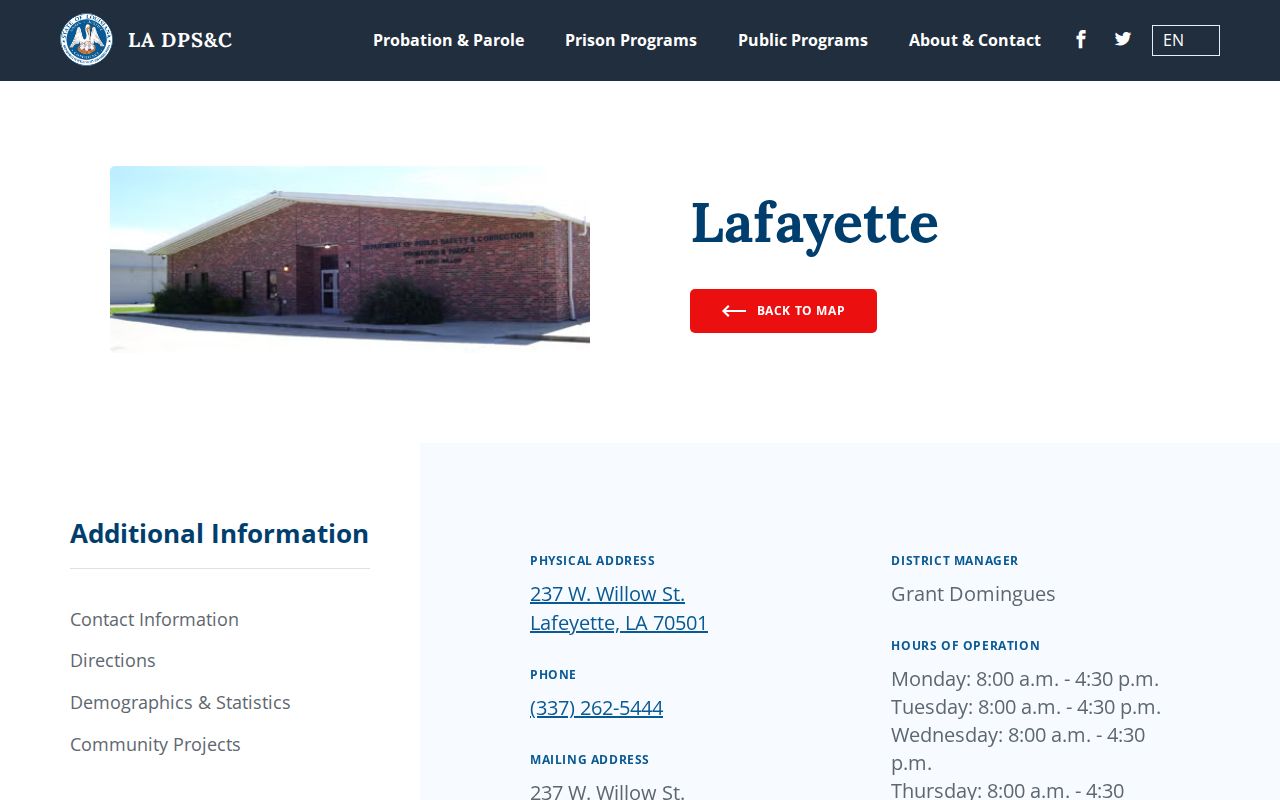
The captured office page helps distinguish a verified assignment from a guess based on geography.
Lafayette Parole Decisions and Release
Louisiana's Committee on Parole is the parole-granting authority within the Board of Pardons and Committee on Parole. The Board publishes an annual schedule organized by month, week, institution, and parish docket. The schedule includes many weekday settings, holiday or no-hearing periods, facility abbreviations, and remote proceedings. Dates can change, so the current Board page controls.
The parole dockets and results page carries records from 2012 forward and links to weekly PDFs. A docket means a case was scheduled. An updated result may state the board action and vote. Grant, denial, deferral, rescission, or another action must be copied as written. A grant is authority subject to prerequisites, not a gate-exit receipt.
R.S. 15:574.4.1 governs formal hearing and decision procedures. Eligibility also turns on offense date. R.S. 15:574.22 sharply limits ordinary parole for many offenses committed on or after August 1, 2024, subject to its listed exceptions, while the older framework in R.S. 15:574.4 contains several thresholds and exclusions. The hearing record should not be used to invent eligibility or a release date.
After a favorable action, search LAVNS and use the phone locator. An assigned P&P district supports physical release under supervision. A facility assignment supports continued confinement. Recalculation, prerequisites, detainers, or later board action may intervene, so the result PDF never stands alone.
The official results landing page shows where current weekly records are posted.
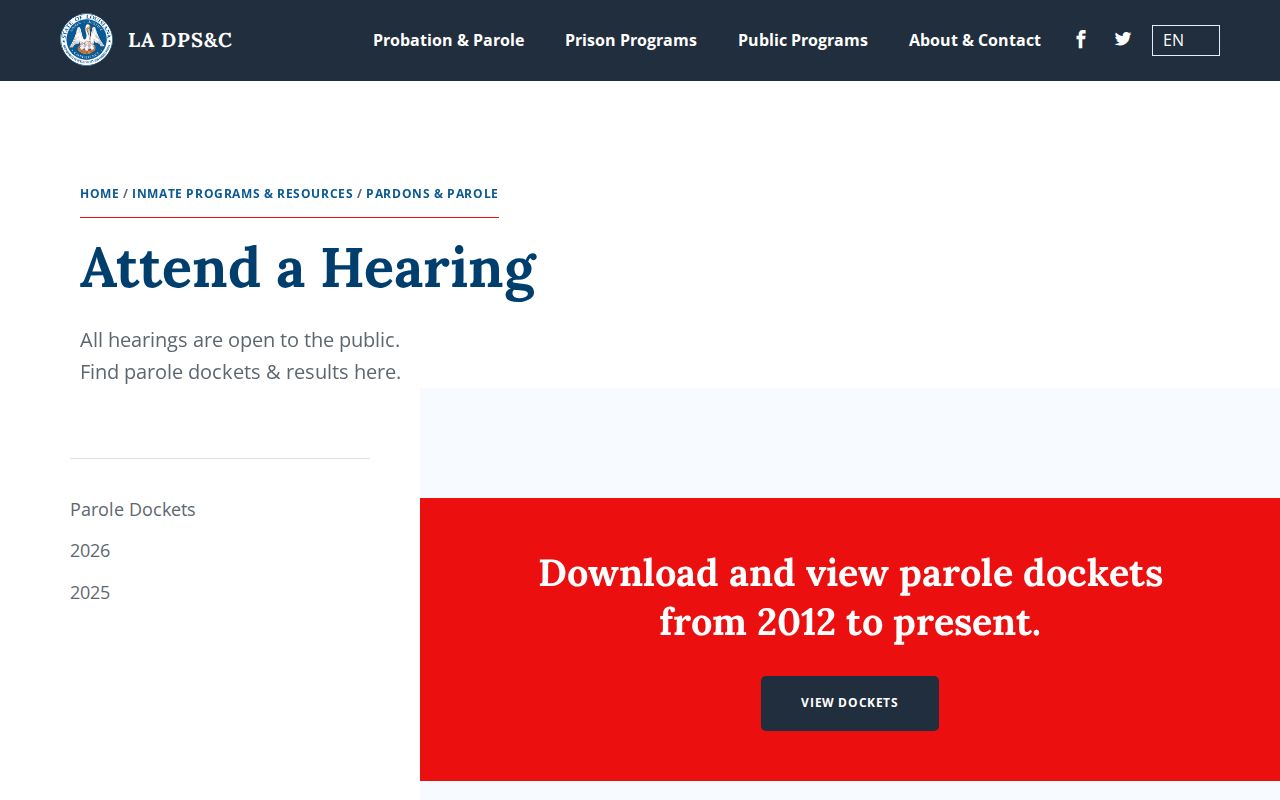
Use the live landing page because individual PDFs may be added, replaced, or corrected.
Lafayette Supervision Warrants and Violations
Conditions are rules attached to community supervision. A violation is an alleged failure to follow a rule. An absconder is a supervised person reported as no longer maintaining required contact. These labels affect legal status, but none by itself proves that the person has been arrested again or returned to a jail.
No current Lafayette-specific public absconder list was established in the reviewed official sources. A warrant must be confirmed with the issuing authority. A supervision matter should be checked with the assigned district. The existence or absence of an online entry is too weak to settle present custody, especially when LAVNS updates on a daily cycle.
When a source record looks wrong, use the source agency's correction path. Give the assigned office the DPS&C or booking number and identify the exact field in question. VINELink republishes information supplied by agencies, so a status error normally starts with the reporting agency rather than with a broad request to the platform.
- Community supervision
- Release from physical incarceration while legal oversight continues.
- Absconder
- A person alleged to have stopped required contact with supervision.
- Warrant
- An official command authorizing arrest; confirm it with the issuing agency.
- Discharge
- The documented end of the supervision or custody term.
Note: A violation allegation and a new custody event are separate facts, and each needs its own official record.
Lafayette Reentry Before Parole Release
LPSO operates the Southwest Central Regional Reentry Program for DOC offenders housed in local jails and returning to Acadia, Allen, Evangeline, Iberia, Lafayette, St. Landry, St. Martin, St. Mary, or Vermilion Parish. Participants may live at the Direct Supervision Unit or LPCC while completing the 100-Hour Pre-Release Curriculum and other educational, family, behavioral, and substance-use work.
Program participation is useful planning evidence. It is not proof of release. A participant remains tied to the DPS&C sentence, even when the bed is in Lafayette Parish. Search LAVNS and obtain the assigned P&P district after the actual status change. The LPSO Corrections Programs page supplies the local program details.
The official LPSO program page documents the Lafayette Parish reentry layer.
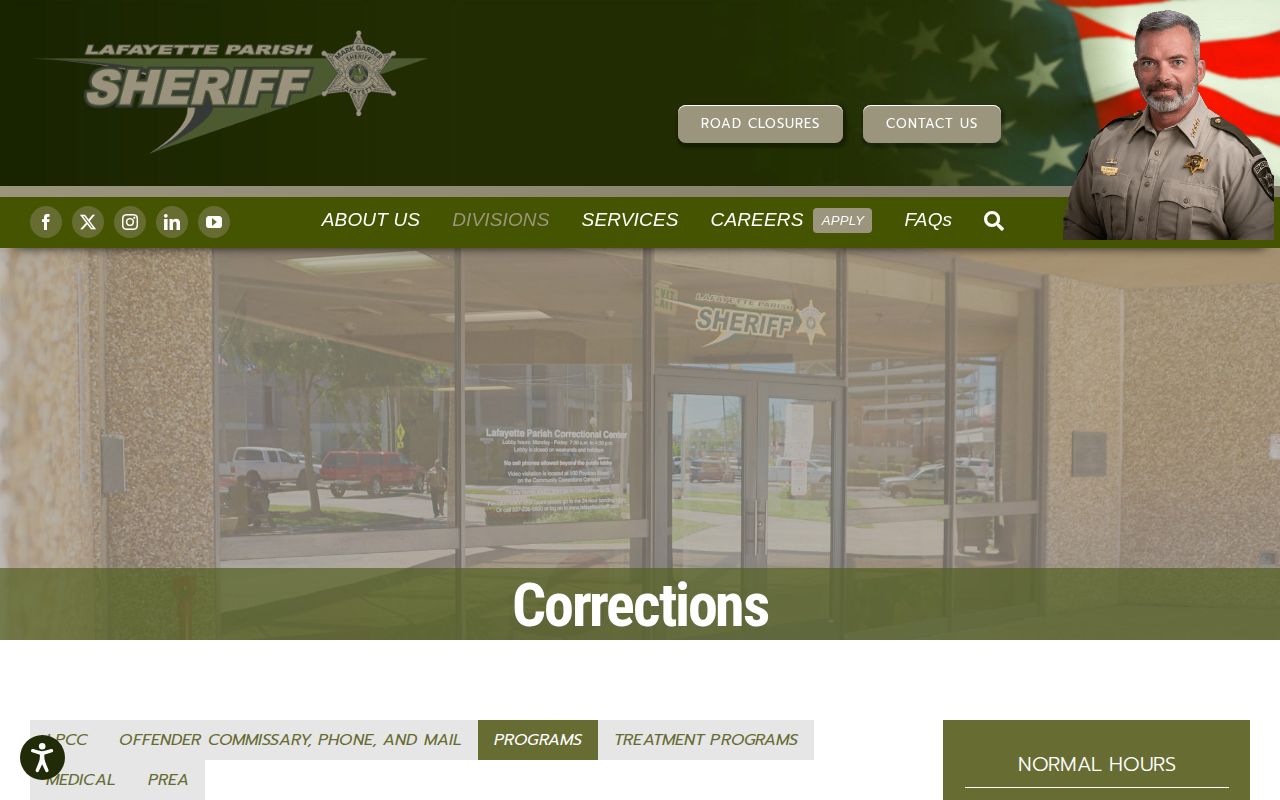
It supports the program description, but no class or placement date substitutes for the actual release record.
Lafayette Parole Discharge Records
Louisiana law preserves three stages: imprisoned, released to parole or other community supervision, and fully discharged. Under R.S. 15:574.7, parole ordinarily continues for the remainder of the sentence and addresses discharge when the full parole term is complete, subject to the statute's conditions. A person can therefore be outside prison and still remain in legal custody through parole.
For a completed state record, R.S. 15:574.12(G) identifies public information that includes the discharge date. Request that narrow item rather than an entire DPS&C case file, much of which is restricted. State the person and DPS&C identifier, ask for the public discharge date, and request the public reason if the maintained record permits it.
Probation completion should be reconciled with the court record and assigned supervision office. The clerk's minutes may show a termination order, while the district can address whether its assignment remains current. Neither a missing online result nor the end of a calendar estimate is as strong as the official discharge or termination entry.